

Earth Day 2026 - How Global Efficiency Regulations Are Shaping the Future of Power Electronics
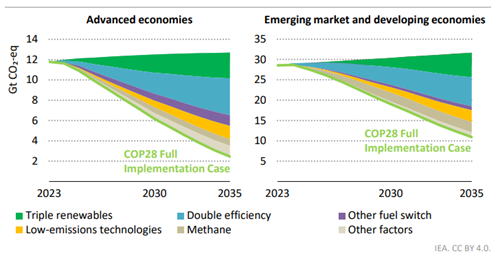
Global momentum around energy efficiency continues to accelerate in recent years, driven by soaring electricity demand of AI data centers, escalating cooling needs, and new policy action across major economies. According to the latest IEA Energy Efficiency analysis, the world remains off‑track from the COP28 goal of doubling global energy‑efficiency improvements by 2030. Progress averaged just 1.3% per year since 2019, far below the 4% required, though it reached 1.8% in 2025, an improvement from 2024’s ~1% rate.
For the power‑electronics industry, these shifts have major implications. Regulatory ambition, cooling‑driven electricity demand, and the rapid electrification of transport are all reshaping expectations for power conversion, motor control, and system efficiency. This blog is a global snapshot of where we are, and what it signals for designers and OEMs going forward.
Europe: Aligning Efficiency with Affordability and Energy Security
In 2025, Europe doubled down on energy efficiency as a pillar of competitiveness, affordability, and energy security. The European Commission launched a new Energy Efficiency Roadmap, backed by major funding commitments under the Clean Industrial Deal and an Affordable Energy Action Plan.
Key developments tied directly to energy‑using electronics include:
- Updated Ecodesign rules for standby power, expected to reduce annual consumption by 4 TWh, equivalent to powering over 22 million refrigerators for a year.
- Mandatory building automation and control systems for commercial buildings under the updated 2024 EPBD, strengthening digital optimization requirements for HVAC, sensors, and power-management systems.
- Expanded national retrofit schemes in markets like Germany, France and the Netherlands, helping accelerate adoption of efficient HVAC systems, heat pumps and envelope improvements.
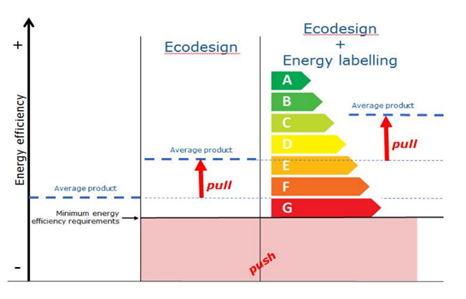
Europe’s continued tightening of standby limits and digital‑control rules directly amplifies demand for ultra‑low‑consumption AC‑DC switchers, intelligent motor‑control ICs, and GaN‑based high‑efficiency topologies.
Japan: Mandatory Building Standards and Continued Top Runner Pressure
Japan made a significant change in 2025 by making energy standards mandatory for new residential buildings, a major expansion of its regulatory framework.
Meanwhile, the Top Runner Program continues to push manufacturers to meet efficiency levels based on the best product already in the market. This approach keeps pressure high on:
- motor efficiency
- power supply performance
- advanced controls
- heat pump technologies
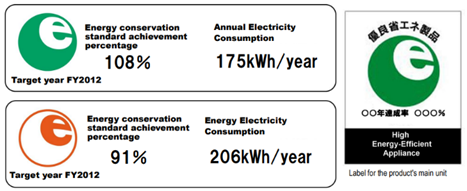
Best‑in‑class becomes the baseline — accelerating adoption of high‑integration, high‑efficiency driver ICs and digital control platforms.
China: Strong Electricity Demand Growth and Aggressive Cooling Action
China remains the largest driver of global electricity demand growth, with continued expansion in cooling, data centers, and industry. Primary energy intensity improvements slowed from prior decades but show signs of recovery, reaching an estimated 3% improvement in 2025.
Key recent actions include:
- A national action plan for efficient heat pumps, promoting deployment in residential, commercial and industrial settings.
- Development of “zero‑carbon industrial parks," emphasizing process electrification and digital energy management.
- Continued tightening of MEPS for air conditioners and motors — two of the largest energy‑using product categories.
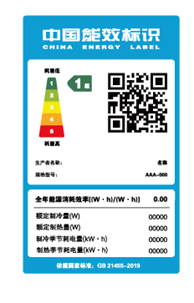
China’s focus on efficient cooling and motor systems expands the market for high‑power, high‑efficiency inverter stages, BLDC motor drivers, and wide‑bandgap‑based power supplies.
United States: Mixed Federal Signals but Strong State‑Level Momentum
The U.S. continues to see a combination of federal rollbacks and state‑level advances. While some federal projects were terminated or softened, states such as California and Massachusetts implemented new building codes and multi‑year efficiency plans targeting buildings, HVAC, and electrification infrastructure.

State‑driven efficiency programs continue to drive adoption of efficient standby architectures, improved appliance MEPS, and advanced EV‑charging power electronics even in the absence of aggressive federal policy.
India: Rapid Cooling Growth and Expanding Efficiency Programs
India stands out with one of the world’s fastest improvements in energy intensity in 2025 — over 4%, far above its average since 2019. Electrification, rising incomes, and historically hot summers are pushing demand for cooling at unprecedented rates.
2025 highlights include:
- Expansion of the PM E‑Drive electric‑mobility program with a 20% funding increase.
- New Star Labelling requirements for evaporative air coolers.
- A national industrial‑efficiency acceleration scheme to promote audits, retrofits, and modern motor systems.

| Star Levels | Rated Service Level (Cubic Meter per minute/watt) | Star Levels | Rated Service Level (Cubic Meter per minute/watt) | |
| 1 STAR | ≥3.1 to < 3.6 | 1 STAR | ≥4.0 to < 4.5 | |
| 2 STAR | ≥3.6 to < 4.1 | 2 STAR | ≥4.5 to < 5.0 | |
| 3 STAR | ≥4.1 to < 4.6 | 3 STAR | ≥05 to < 5.5 | |
| 4 STAR | ≥4.6 to < 5.1 | 4 STAR | ≥5.5 to < 6.0 | |
| 5 STAR | ≥ 5.1 | 5 STAR | ≥ 6.0 |
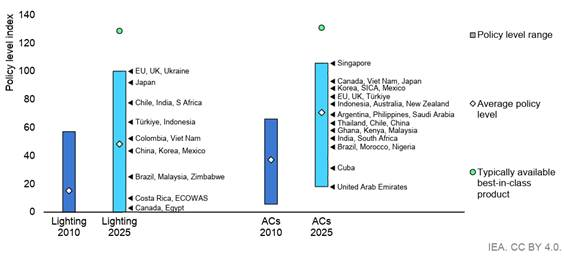
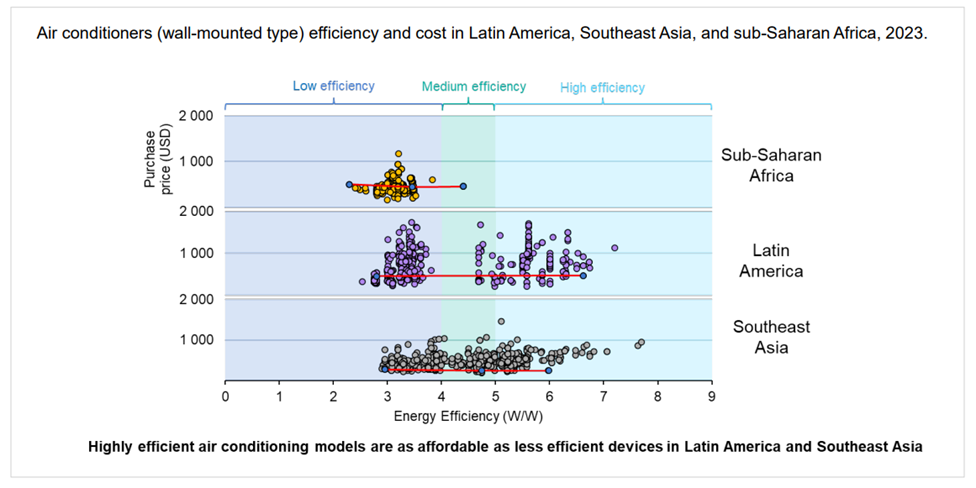
Cooling remains the largest load concern. Global AC demand has grown over 4% annually, and inefficient ACs purchased since 2019 have created a load roughly equal to that of global data centers.
India’s shift toward BLDC fan motors, inverter‑driven ACs, and efficient commercial HVAC is directly increasing adoption of intelligent motor‑control ICs and PI‑class high‑efficiency AC‑DC switchers.
Global Themes Emerging
Cooling‑related electricity demand continues to accelerate in emerging economies, driven by affordability and necessity. If all ACs purchased globally since 2019 had been best‑available models, the world could have avoided electricity growth equivalent to global data‑center demand growth in the same period.
In 2025, global electricity demand grew 3.3%, over twice as fast as total energy demand, fueled by industry, AI, cooling and EV adoption. Global efficiency‑related investment is set to hit USD 800 billion in 2025, up 6% YoY and 70% higher than 2015 levels, with particularly strong activity in EVs and heat pumps. Over 250 new or updated efficiency‑related policies covered countries responsible for 85% of global energy demand — up significantly from 2024.
What These Trends Mean for Power‑Electronics Design
Across global markets, regulatory tightening, electrification and demand‑side pressures converge on a consistent set of expectations for power converters and motor‑drive systems:
Ultra‑Low Standby Is Non‑Negotiable
- Europe’s new standby limits and global labeling updates continue to emphasize sub‑100‑mW standby architectures.
BLDC and Inverter Systems Are Becoming the Norm
- From India’s ceiling fans to global ACs, variable‑speed architectures are replacing induction‑motor systems at scale.
Wide‑Bandgap Adoption Is Accelerating
- The need for higher power density, heat‑pump expansion, and EV‑charging infrastructure aligns with growing GaN and SiC penetration.
Digital & AI‑Enabled Control Is Increasingly Standard
- Commercial‑building automation mandates and industrial‑energy‑management policies expand the need for intelligent control ICs.
The Bottom Line
Global efficiency ambition is rising, electricity demand is accelerating, and cooling demand is reshaping emerging‑market energy systems. Yet the world remains behind its COP28 efficiency trajectory, leaving enormous opportunity for innovation.
For power‑electronics engineers and system architects, this means designing converters, drivers and controls that are:
- ultra‑efficient at light load
- robust under global regulatory regimes
- optimized for BLDC and inverter architecture
- ready for digital monitoring and control
- compact, reliable and cost‑effective
The push for efficiency is is now one of the primary forces shaping product design across all major end‑use categories.